Altitude's Influence on Endurance Performance and Combined Betting Dynamics in Elevated Racing Venues
Written by Zoe Sullivan · Aug 22, 2026
Altitude's Influence on Endurance Performance and Combined Betting Dynamics in Elevated Racing Venues
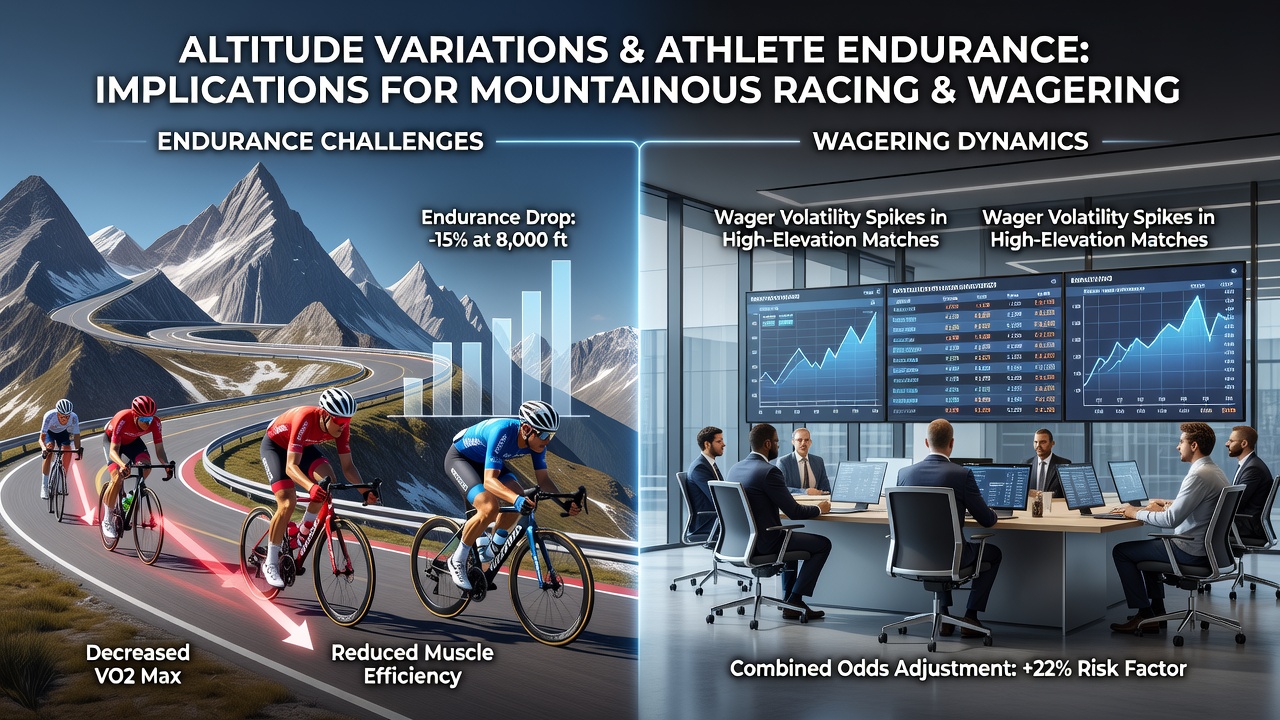
High-altitude environments reduce oxygen partial pressure which lowers maximal oxygen uptake in athletes by approximately 10 percent for every 1000 meters gained above sea level according to physiological data compiled by research teams at multiple institutions, and this change directly alters endurance output during prolonged efforts in events such as cycling stages through the Alps or running competitions in the Andes. Athletes who arrive without prior exposure experience rapid drops in power output and pacing ability while those who complete structured acclimatization periods show partial recovery through elevated hemoglobin levels that improve oxygen transport over several weeks of preparation.
Physiological Responses to Elevation Changes
Studies conducted at sites above 2000 meters reveal that heart rate rises to compensate for thinner air yet stroke volume falls which together limit sustained performance in endurance disciplines, and data collected during the 1968 Mexico City Olympics demonstrated measurable declines in distance running times compared with sea-level equivalents while sprint events remained largely unaffected. Researchers tracking participants in the Tour de France mountain stages have recorded consistent patterns where teams with prior high-elevation training camps maintain higher average speeds on climbs exceeding 2500 meters whereas others lose ground after the initial ascents because fatigue accumulates faster under hypoxic conditions.
Additional measurements from training facilities in Colorado and Kenya indicate that living at moderate altitude combined with training sessions at lower elevations produces the strongest adaptations for events scheduled in August 2026 mountain races, and these protocols have been adopted by national squads preparing for multi-stage competitions across varied terrain. Observers note that individual variation remains high because genetic factors influence how quickly red blood cell mass expands and how efficiently muscles utilize the available oxygen once it reaches the working tissues.
Performance Patterns in Mountainous Racing Venues
Events held in venues such as La Paz, Bolivia at 3600 meters or the Swiss Alpine passes demonstrate that endurance athletes require between 14 and 21 days of exposure before performance stabilizes, and records from international cycling federations show that teams scheduling recovery days at intermediate altitudes achieve better cumulative results across week-long stage races. Data gathered during South American football tournaments reveal that visiting squads from lowland countries post reduced distance covered in the second half of matches played above 2500 meters whereas local sides maintain output levels closer to their sea-level norms because of lifelong adaptation.
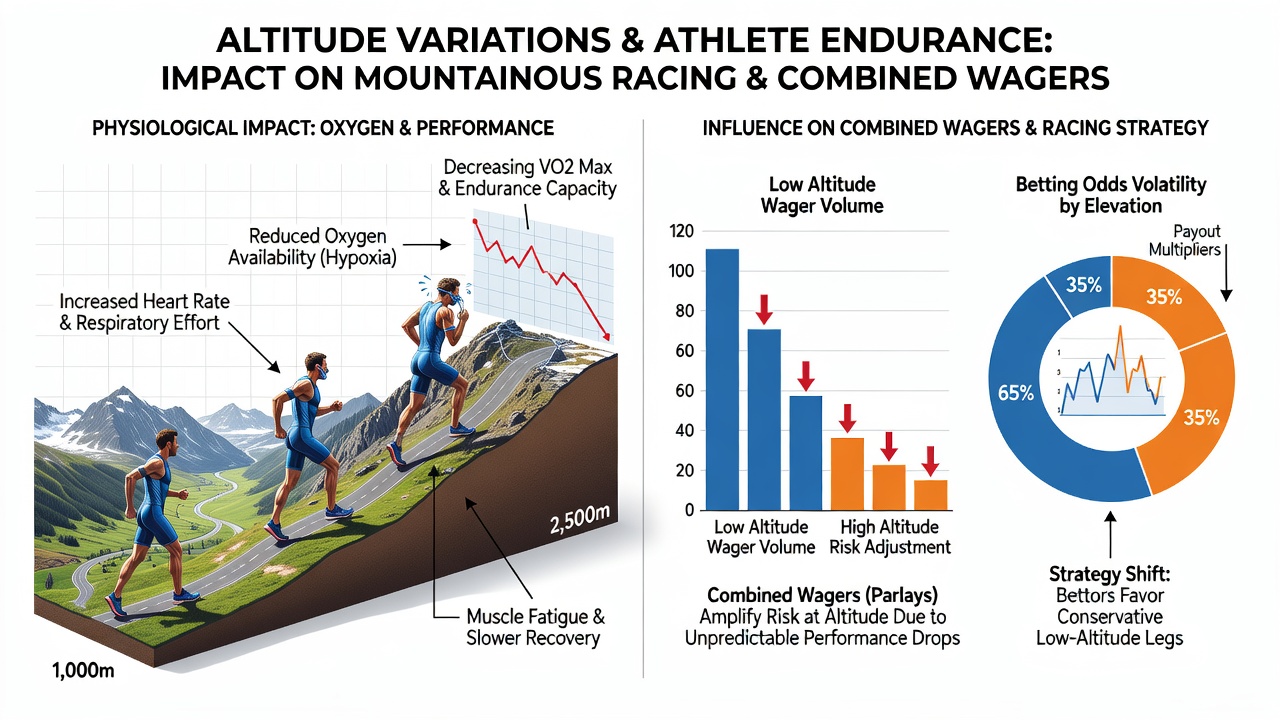
Case examples from the 2025 Pan American Games held in elevated regions further illustrate that combined endurance loads across multiple days produce steeper declines when athletes lack sufficient recovery windows between stages, and medical monitoring teams report increased lactate accumulation at lower exercise intensities under these conditions. Those who have examined race telemetry note that pacing strategies shift noticeably once elevation exceeds 1800 meters with athletes conserving energy earlier in efforts to avoid premature exhaustion on subsequent climbs.
Effects on Combined Wager Structures
Betting markets that incorporate multiple high-elevation events adjust odds to reflect documented endurance differentials, and historical results from mountain stage accumulators show higher payout rates for selections that include athletes or teams with verified acclimatization histories. Figures released by sports analytics groups indicate that combined wagers spanning both lowland and highland venues carry distinct risk profiles because performance variance widens when one leg occurs at altitude while others remain at sea level.
Operators tracking participation in multi-event products report increased interest during periods when major races feature significant elevation changes, and data from European and North American platforms reveal that bettors increasingly factor acclimatization timelines into their selections for August 2026 fixtures already listed in early schedules. A review published through the American College of Sports Medicine supplies quantitative benchmarks that market analysts reference when modeling expected outcomes across varied elevations, while an Australian Institute of Sport report on altitude training protocols provides additional context used by international handicapping services.
Conclusion
Altitude variations create measurable constraints on aerobic endurance that propagate through both individual race results and the structure of combined wagers placed on mountainous venues, and the patterns observed across decades of competition data continue to shape preparation timelines and market assessments for upcoming high-elevation matches. Continued collection of performance metrics at sites worldwide supplies the factual basis for understanding these interactions without reliance on subjective interpretation.