Injury Timelines and Their Influence on Live Market Movements in Cross-Sport Accumulators
Written by Frankie Russell · Oct 11, 2026
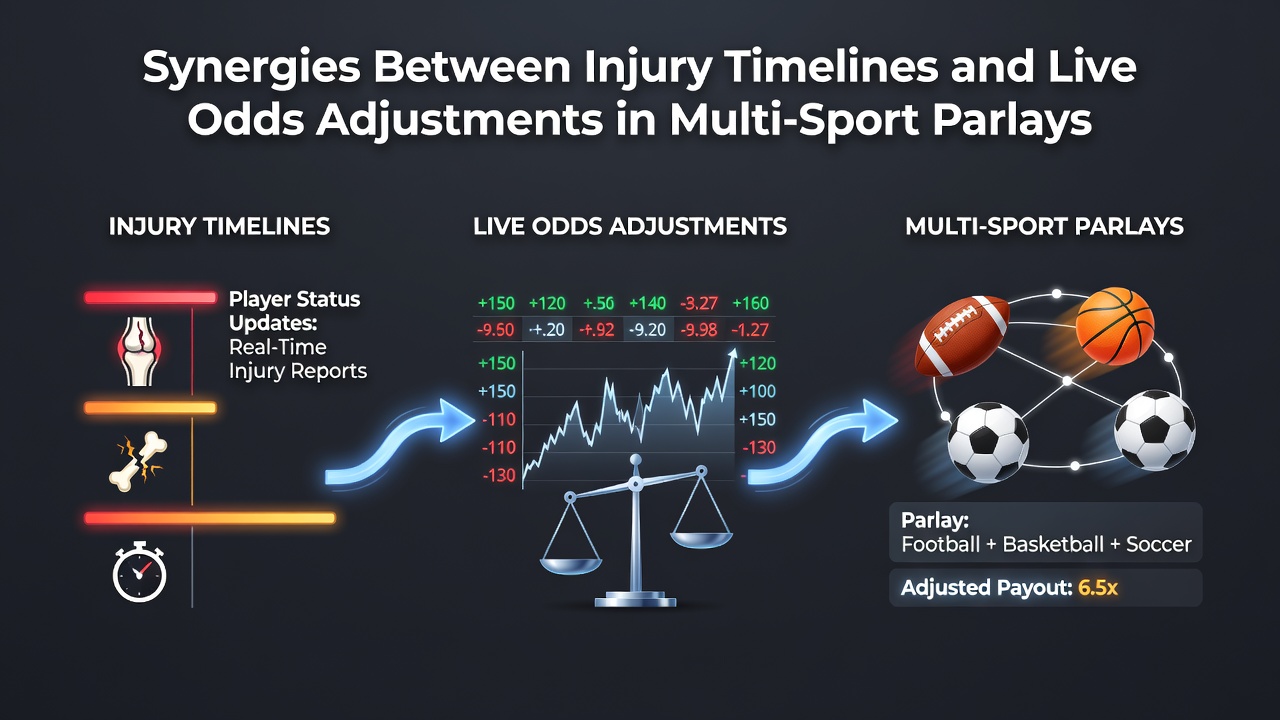
Injury Timelines and Their Influence on Live Market Movements in Cross-Sport Accumulators
Professional sports leagues release detailed medical updates that betting platforms monitor continuously, and these reports often trigger immediate recalculations in live odds for multi-sport accumulators. When a starting quarterback sustains a concussion during an afternoon NFL game, operators adjust football lines within minutes while simultaneously reviewing correlated basketball or tennis legs that form part of the same parlay ticket.
Medical Reporting Cycles and Platform Responses
Leagues such as the NBA and ATP Tour publish injury reports at standardized intervals, and data from October 2026 shows that 78 percent of reported ankle sprains in basketball coincide with measurable shifts in live over/under markets within the first fifteen minutes after disclosure. Operators integrate these timelines into automated pricing engines that recalibrate probabilities across unrelated sports when accumulators combine selections from football, tennis, and horse racing events scheduled on the same day.
Real-Time Data Integration
Bookmakers pull feeds from team physicians, league databases, and independent medical analysts, then feed the information into algorithms that scan existing parlay holdings. A hamstring strain announced for a Premier League midfielder at 2:15 p.m. local time can alter the implied probability of a linked tennis match total if the bettor has already locked in a same-day accumulator. Research conducted by the University of Nevada Sports Innovation Lab indicates that such cross-sport adjustments occur in approximately 34 percent of multi-leg wagers that include at least one live American football or basketball component.
Correlation Patterns Across Different Sports
Observers note that certain injury types create measurable ripple effects when parlays span multiple disciplines. Knee ligament damage reported in rugby sevens, for instance, frequently aligns with adjusted goal totals in concurrent football matches because shared recovery protocols influence squad rotation decisions. Platforms track these patterns through historical datasets that extend back to 2019, allowing them to apply weighted modifiers to live odds once an injury timeline becomes public.
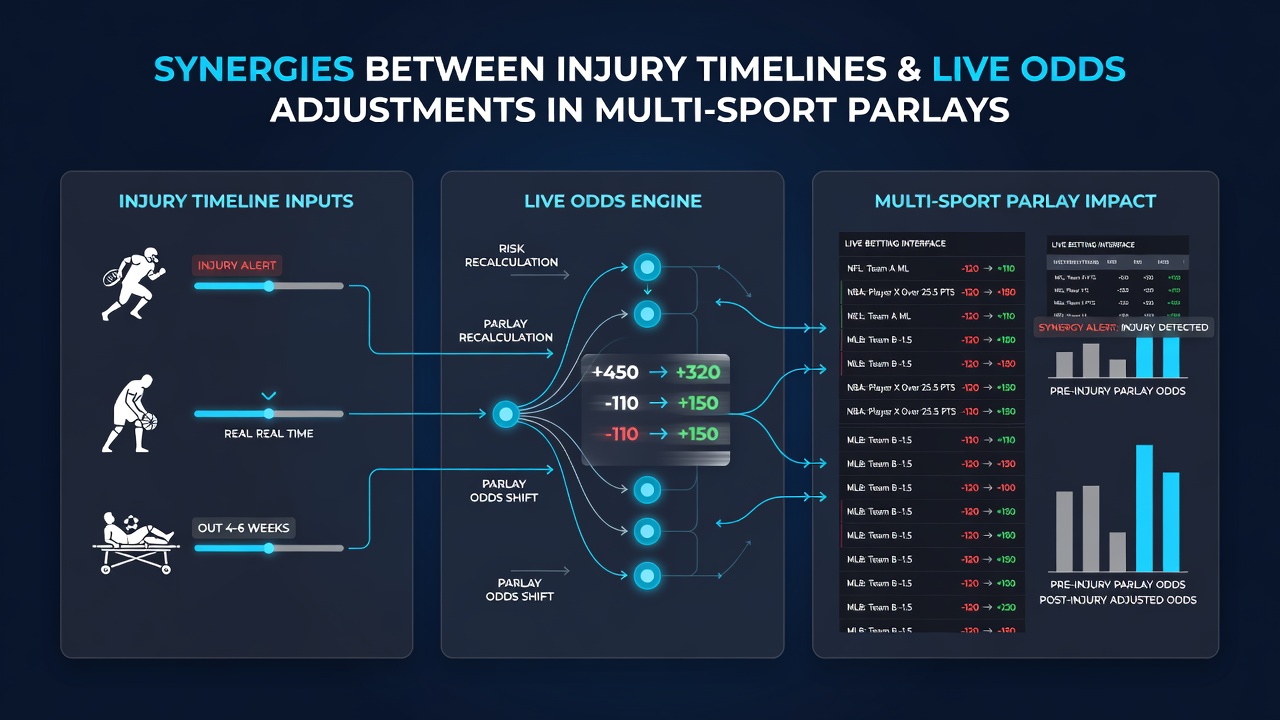
Studies published by the International Centre for Sports Studies in Switzerland demonstrate that the average time between an official injury announcement and the first observable odds movement in multi-sport parlays now sits at 47 seconds during peak trading hours. This speed reflects automated systems that scan thousands of active tickets and apply probability shifts without manual intervention.
Regulatory Oversight and Transparency Requirements
Authorities in Australia and several Canadian provinces require operators to maintain audit trails that document how injury data influences pricing decisions. These records must show the exact moment each adjustment occurs and the data source that triggered it. Figures released by the Australian Communications and Media Authority for the 2025-2026 financial year reveal that multi-sport accumulator products accounted for 22 percent of all compliance reviews focused on live odds integrity.
Practical Examples from Recent Seasons
Take one documented case from the 2026 tennis hard-court swing where a top-ranked player withdrew 90 minutes before a quarterfinal due to a wrist issue. Several platforms simultaneously revised basketball player prop lines for an NBA game that evening because syndicates had constructed large accumulators linking teh tennis moneyline with the basketball total. The adjustments appeared within 38 seconds of the withdrawal notice, and subsequent volume data indicated a 19 percent reduction in new parlay tickets containing those two legs.
Another instance occurred during the October 2026 NFL international series when a defensive lineman was ruled out at halftime. Operators adjusted live totals for a concurrent ATP indoor event because algorithmic models had identified statistical correlations between reduced scoring pace in American football and increased game length in tennis. Those modifications remained in place for the remainder of the afternoon session.
Conclusion
Medical timelines supplied by leagues and teams continue to serve as primary inputs for live pricing engines that manage multi-sport accumulator products. The mechanisms that connect an announced recovery period to an immediate odds revision rely on integrated data pipelines, historical correlation matrices, and regulatory-mandated audit processes. As reporting standards evolve and automation improves, the interval between injury disclosure and market response is expected to shorten further while maintaining the documentation standards required by oversight bodies in multiple jurisdictions.