Venue Variables: How Stadiums and Tracks Inform Cross-Discipline Accumulator Choices
Written by Zoe Sullivan · Aug 22, 2026
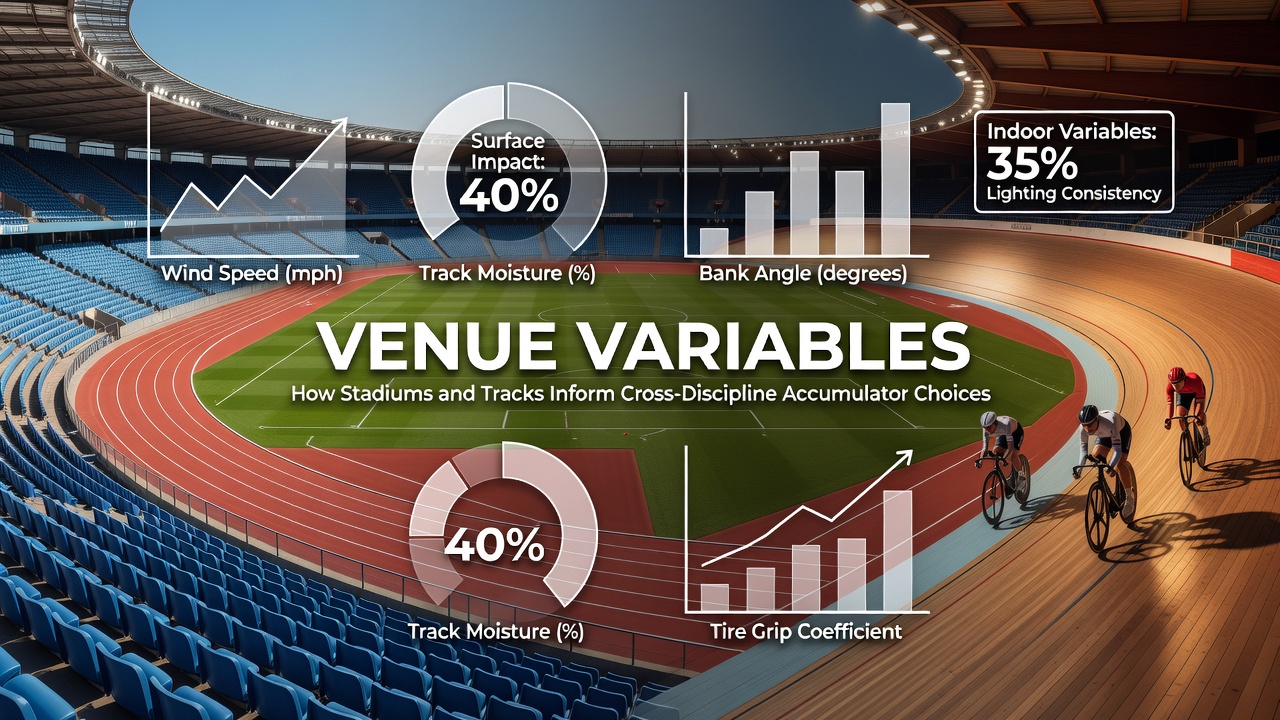
Venue Variables: How Stadiums and Tracks Inform Cross-Discipline Accumulator Choices
Stadium dimensions, track surfaces, and environmental factors shape statistical outcomes across horse racing, football, tennis, and basketball, and data analysts track these elements when constructing accumulators that combine selections from multiple disciplines. Observers note that venue-specific variables such as altitude, pitch length, and surface composition alter scoring rates, pace, and finishing positions in measurable ways, which researchers compile into models used by professional syndicates and betting syndicates alike.
Track Conditions in Horse Racing and Their Carryover Effects
Researchers at racing analytics firms compile ground conditions, rail positions, and course configurations that determine average winning times and draw biases, and these datasets feed directly into accumulator selections when bettors pair racing results with other sports. Data from major tracks in August 2026 showed that firmer ground at Newmarket increased sprint speeds by an average of 1.8 seconds over five furlongs compared with softer conditions recorded the previous month, while similar patterns appear at Flemington where rail movement shifts inside draws toward longer-priced winners. Analysts cross-reference these figures with football goal averages at high-altitude venues because both datasets reflect how reduced oxygen and firmer surfaces accelerate play, creating correlated edges in multi-leg bets.
Football Stadium Geometry and Scoring Patterns
Stadium architects design pitch dimensions and seating configurations that influence passing lanes and set-piece success rates, and statisticians record these measurements alongside historical goal tallies to refine accumulator forecasts. Narrow pitches at clubs such as Borussia Mönchengladbach correlate with higher through-ball completion percentages, whereas wider surfaces at clubs like Manchester City allow wider attacking patterns that reduce shots from central areas. Observers compile these venue metrics with basketball court dimensions because both sports feature confined playing areas where boundary proximity alters shot selection and defensive pressure, allowing model builders to adjust expected points and goals simultaneously when constructing cross-discipline accumulators.
Tennis Court Surfaces and Momentum Transfer
Grand Slam venues maintain distinct surface speeds that affect rally lengths and service hold percentages, and performance databases log these differences to support accumulator combinations involving tennis matches and concurrent basketball games. Clay courts at Roland Garros extend average rally duration to 7.4 shots, while grass at Wimbledon shortens the same metric to 3.9 shots according to official tournament records, and these variations mirror how hardwood speed in basketball arenas influences transition offense efficiency. Analysts integrate surface-specific data with football pitch conditions because both environments determine how quickly possession changes hands, enabling layered bets that account for pace adjustments across disciplines during the same betting window.

Altitude and Environmental Factors Across Venues
High-altitude locations such as Estadio Hernando Siles in La Paz and certain mountain racetracks in Colorado produce measurable physiological effects on athletes and horses, and meteorological agencies publish monthly reports that bettors incorporate into accumulator algorithms. Studies conducted by the International Olympic Committee documented a 6 percent drop in aerobic performance above 2,500 meters, a figure that aligns with reduced stamina observed in late-race horse fractions at similar elevations. Modelers combine these environmental readings with indoor arena humidity levels in basketball because both factors modify recovery intervals between high-intensity efforts, allowing accumulators to weight selections according to venue elevation and climate rather than team form alone.
Building Accumulators with Venue-Adjusted Metrics
Professional syndicates maintain databases that normalize statistics across venues before combining selections, and software platforms now integrate live weather feeds with historical venue data to recalculate probabilities in real time. One documented approach pairs a horse racing selection from a left-handed track with a football over-total from a stadium known for end-to-end play, then layers a basketball under-total from an arena with short corners that suppress three-point volume. Research institutions such as the Sports Science Institute publish peer-reviewed papers on these normalization techniques, while the Australian Gaming Council releases annual reports on how venue data influences multi-sport wagering patterns across the Asia-Pacific region. These resources provide the raw inputs that accumulator constructors apply when venue variables shift expected outcomes in correlated directions.
Conclusion
Venue variables supply measurable inputs that refine accumulator construction across horse racing, football, tennis, and basketball, and organizations continue to expand datasets that capture pitch dimensions, surface composition, altitude, and climate. Analysts apply these normalized figures to identify overlapping edges rather than relying on isolated team metrics, and the practice has become standard among syndicates that operate across multiple betting markets. As August 2026 data streams continue to update historical baselines, the integration of stadium and track characteristics into cross-discipline models remains a core component of systematic accumulator design.